Georgia’s 2026 Plastic Packaging Rules: What Restaurants & Cafes Need to Know
- Eco cane
- Dec 10, 2025
- 2 min read

Georgia’s 2026 Plastic Regulations: A Practical Guide for HoReCa Businesses
Starting January 1, 2026, Georgia will implement new regulations targeting single-use plastic packaging that comes into direct contact with food — particularly items that may leach harmful substances when heated or exposed to fats and acids.
This change, led by the Ministry of Environmental Protection and Agriculture, is part of Georgia’s broader strategy to reduce plastic pollution and align with European environmental standards. But contrary to widespread rumors, not all plastic packaging will be banned.
❌ What’s Being Restricted?
The law specifically targets plastic containers that chemically react with food, potentially releasing carcinogenic or toxic compounds (e.g., certain polystyrene foam boxes, PVC wraps, or low-grade plastic trays used for hot meals, soups, or oily dishes).
According to public statements by Kote Gabrichidze, President of the Restaurant Association of Georgia, the focus is on food safety, not a total plastic ban.
“The goal is to ensure that single-use packaging materials are safe for health — meaning they should not be carcinogenic,” he confirmed during a working meeting with industry stakeholders.
✅ What’s Still Allowed?
Plastic bottles (for water, soft drinks)
Plastic film used for dry or non-reactive foods (e.g., bread, pastries)
Pizza boxes and khachapuri wrappers made of paper (already widely used in Georgia)
Rigid plastic containers that are certified as food-safe and non-reactive (though these may face scrutiny in future phases)
Importantly, paper-based packaging with plastic lining (common in many “eco” cups and boxes) may not comply if the lining contains conventional plastic (e.g., PE). Truly sustainable alternatives must be 100% plastic-free.
🌱 The Smart Switch: Certified Compostable Packaging
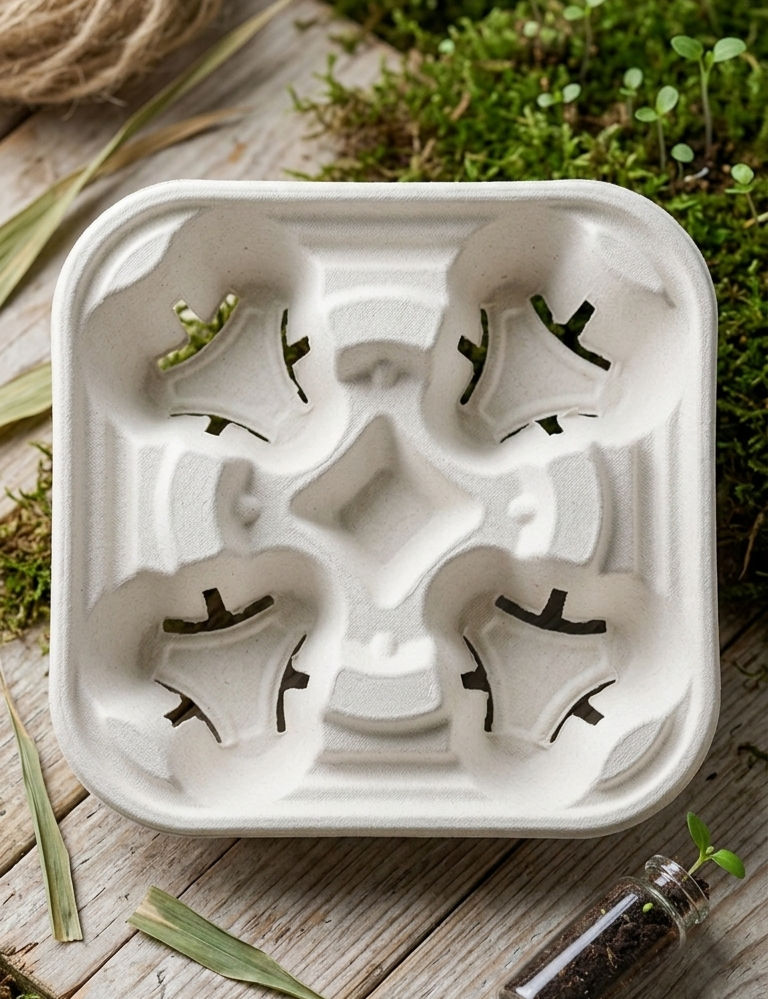
For restaurants, cafes, and delivery services, the safest and most future-proof solution is certified compostable packaging made from plant-based materials — like sugarcane bagasse.
EcoCane’s products are:
Made from 100% sugarcane fiber (bagasse) — a byproduct of sugar production
Free of plastic linings, PFAS, and toxins
Certified compostable (meets EN 13432 standards)
Heat-, oil-, and cut-resistant — ideal for khachapuri, soups, and street food
Already available in Georgia with nationwide delivery
Unlike “biodegradable” plastics (which often require industrial facilities and still leave microplastics), bagasse packaging breaks down in 60–90 days in commercial compost, returning nutrients to the soil — not pollution to the environment.
📅 What Should Businesses Do Now?
While enforcement mechanisms are still being finalized, the Ministry has indicated that businesses will be given a transition period. However, with rising customer demand for eco-friendly options and the 2026 deadline approaching, early adoption is a competitive advantage.
“A sharp price increase is not expected,” notes Gabrichidze. “Many eco-alternatives are now cost-competitive with conventional plastic.”
✅ Get Ready with EcoCane
We supply 51+ compostable food packaging items — from lunch boxes and coffee cups to cutlery and lids — all in one place.
Order samples, request a catalog, or schedule a consultation today.
👉 Visit ecocane.ge — your partner in Georgia’s plastic-free future.


Comments